
Beauty Guides
Beauty mark vs mole,are they similar — Practical Guide
A practical guide to beauty mark vs mole,are they similar. Compare the key concepts, product formats and points to check before choosing.
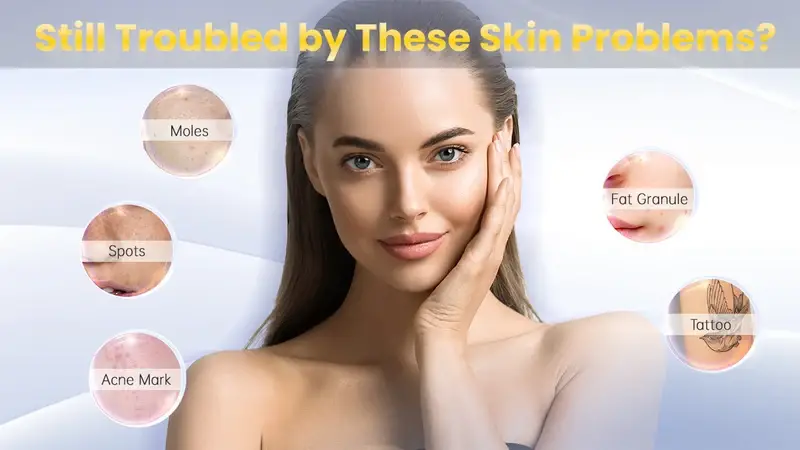
Moles, aka nevi, are skin growths that result from an accumulation of pigmented cells known as melanocytes. Moles are a common and typically harmless skin feature.
Beauty marks, aka beauty spots, are tiny, dark patches on the skin that are visually attractive or pleasant. They are commonly regarded to enhance a person's look and may be an attractive feature on the face or body.
Both beauty marks and moles are common and typical body features, however, it is crucial to keep an eye out for any changes in moles and seek medical attention if you are concerned about their look or characteristics. Routine skin checkups and sun protection are essential for keeping your skin healthy.
Characteristics of Beauty Marks
The phrase beauty mark (or beauty spot) denotes that it is visually appealing. Think about Cindy Crawford, Marilyn Monroe, and plenty of other celebrities whose facial moles made them even more unique.
Likely appears in a prominent spot, usually on the face.
Moles can vary greatly! Dark, light, flat, raised, small, or large
They can be liked or disliked by their owners, even if they are not always attractive.
Can occur anywhere on the body or face.
An individual can have quite a lot or very few.
A cluster of cells extending deeper into the skin.
Three Different Types of Moles
Skin moles are quite common; almost everyone has them. With so many different colors, shapes, and sizes, it can be difficult to determine if a spot on your body is normal or poses a health risk. Most individuals have ordinary, harmless moles. However, different types of moles might raise the risk of developing melanoma.
An acquired mole, aka a common mole, appears on the skin after birth. Most individuals with fair complexions have between 10 and 40 acquired moles. However, data show that having 50 or more acquired moles increases the risk of melanoma. Acquired moles are not usually cancerous, yet they can be.
Slightly raised, flat, or dome-shaped.
One color (black, brown, red, pink, tan, blue, or skin-colored)
Small usually ¼ inch or less, like a pencil eraser
Congenital moles, often known as birthmarks, vary significantly in size, color, and shape. Congenital moles occur in 0.1 to 2.1% of babies. Larger congenital moles are more likely to become cancerous in maturity (4–6% lifetime risk). Always consult a doctor if a birthmark changes in size, shape, color, or discomfort.
Some birthmarks can be treated for cosmetic purposes, including
Dermabrasion (Skin Resurfacing)
Chemical peel for skin brightening
Laser treatment for lightening
If your family has a lot of atypical moles, you may have FAMMM Syndrome (familial atypical multiple mole melanoma). FAMMM Syndrome increases the risk of melanoma by up to 17.3 times compared to those without FAMMM. If you have a history of atypical moles, consult your doctor for scheduling annual examinations.
In general, atypical moles include
Irregular form with uneven edges
Colors vary, including brown, tan, red, and pink
Bigger than a pencil eraser, six millimeters or more
More common among those who have significant sun exposure
Especially common among fair-skinned individuals
To differentiate between moles and beauty marks, it's important to consider their distinctive features and characteristics. While both are types of skin marks, they have different appearances and underlying causes. Here’s how to distinguish between the two
Characteristics: Moles are tiny skin growths caused by clusters of melanocytes (pigment-producing cells). They can vary widely in color, shape, and size. Moles can be flat or elevated and have a variety of colors, such as black, brown, pink, red, or skin-colored. Some moles can have hair.
Formation: Moles usually grow throughout childhood or adolescence. Sun exposure can impact the formation of moles, particularly in those with light skin.
Frequency: Moles are more prevalent than beauty marks and can form anywhere on the body, even in places not exposed to sunlight.
Characteristics: Beauty marks are small, dark patches on the skin, typically round or oval. They are usually flat or slightly raised, with a consistent color that ranges from black to light brown. Beauty marks are often small, usually less than 6mm in diameter.
Formation: Beauty marks can sometimes be present from birth or develop over time because of factors such as sun exposure or hormonal changes. Some individuals can have one or more beauty marks by birth, while others develop them as children, adolescents, or adults.
Frequency: Beauty markings, which are less common than moles, are frequently found on parts of the body that are exposed to direct sunlight, such as the face, arms, neck, and shoulders.
Cultural Perception: Beauty marks have long been associated with attractiveness and charm, thus these marks are known as beauty marks or beauty spots.
Monitoring and Self-Examination of Unusual Moles
Choose a well-lit area: To ensure that you can properly see your skin throughout the inspection, select a well-lit place or use a portable mirror.
Undress completely: Examine your whole body, giving specific attention to places that are rarely exposed to sunlight, such as between the fingers, the scalp, and toes, the soles of your feet, and beneath the nails.
Use a full-length mirror: Examine your front, sides, and back in front of a full-length mirror. Raise your arms to check your underarms and upper arms, then bend your elbows to view your forearms and palms.
Use a hand mirror: Use a hand mirror to examine the back of ears, neck, and back of neck.
Examine your face: Examine your face using a hand mirror, paying close attention to your ears, nose, lips, and mouth. Split your hair to examine the scalp.
Examine your lower body: Sit down and inspect your lower body, including your shins, ankles, toes, and thighs.
When checking your moles, use the ABCDE approach to find any warning signs of possible concerns.
A- Asymmetry: Check if one half of a mole is different from the other.
B- Border: Look for uneven or unclear edges along the mole's border.
C - Colour: Look for multicolored moles or those with irregular pigmentation.
D - Diameter: Look for moles that are more than 6mm in diameter equal to the size of a pencil eraser.
E- Evolution: Look for variations in moles over time, such as growth, shape color, or texture variations, as well as symptoms like itching, discomfort, or bleeding.
There are many ways to remove moles, but which is the safest and most effective? Here are some reliable mole removal tools consider
Handheld Plasma Pen for Mole Removal
By generating plasma over 2000℃, the pen safely carbonizes and removes skin tags, moles, and warts without causing bleeding. With its two-intensity control design, it offers flexibility to meet various treatment needs. In addition, the pen's head is equipped with 2 LED lights, assisting in a clear visualization of the skin for accurate operation. Most importantly, its compact pen-like design is not only easy to operate but also highly portable, making it an ideal choice for daily skincare routines.
Portable Ozone Plasma Pen with Skin Rejuvenation
Utilizing high-frequency electrical currents, it converts oxygen into ozone to target and break down unwanted moles, spots, skin tags, and more, while stimulating collagen production for youthful skin. Its non-invasive approach ensures no scarring or bleeding. With 3 ceramic tips, it addresses various skin concerns on areas like the eyes, face, arms, and legs. Furthermore, the compact and elegant desktop design not only speaks of high quality but also ensures portability, making it ideal for both home and travel use.
2-in-1 Plasma Beauty Machine with RF&EMS
With its dual-handle innovation, the plasma beauty machine offers comprehensive skin care. The plasma handle targets moles, skin tags, and scars, while the RF&EMS handle stimulates collagen production and muscle contraction for a firmer, youthful appearance. Equipped with multiple attachments for face and body, a touch screen for parameter selection, and a foot pedal for easy control, it's for professional salons seeking versatile skincare solutions.
Everyone is unique, with a beauty and charm that set oneself apart from others. Celebrating your uniqueness and originality requires appreciating all that defines you, including your moles, beauty marks, and other unique features. Remember to embrace your actual self, diverse beauty, and inner confidence, create your standards and positive self-talk, surround yourself with positivity, tell your story, and emphasize self-care as you strive for self-acceptance and self-celebration. Keep in mind that your beauty marks and personality are what distinguish you. Accept and appreciate them as part of your unique identity. Accepting your individuality enables you to navigate the world with confidence, elegance, and self-assurance. Celebrate yourself just the way you are, and let your light shine brightly for everyone to see. You are beautiful on the inside and out!
Questions & discussion