
Beauty Guides
Does Red Light Therapy Work — Practical Guide
A practical guide to does Red Light Therapy Work. Compare the key concepts, product formats and points to check before choosing.
02 How Does Red Light Therapy Work?
03 What Are the Benefits of Red Light Therapy?
04 Is There Science Behind Red Light Therapy?
05 What Are the Side Effects of Red Light Therapy?
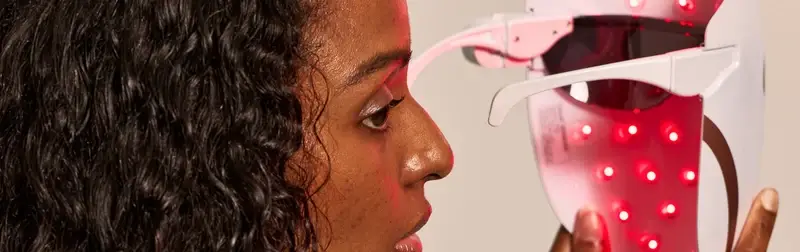
Red light therapy (RLT), also known as low-level light therapy (LLLT) or photobiomodulation, is a therapeutic technique that uses specific red light wavelengths applied directly onto the skin's surface. Red light wavelengths exist on the visible light spectrum and typically range between 600-700nm in length. Along this spectrum, certain wavelengths are more powerful than others due to how they interact with skin cells and tissues at the molecular level. For example, 630nm and 660nm wavelengths penetrate skin cells at the optimal point to absorb light energy and trigger cellular responses such as collagen production, enhanced blood circulation, inflammation regulation, and much more.
How Does Red Light Therapy Work?
Red light therapy for skin rejuvenation and wellness has two key mechanisms
The light energy stimulates the production of ATP in the mitochondria of the cells. The light energy interacts with photoreceptor cytochrome c oxidase to boost the energy of the cell, allowing it to act as a younger cell would.
The light energy creates a low level of stress on the cells to trigger the cell repair process.
An increase of energy within the treated cells triggers a cascade of biological responses in the body. The correct dose of light has many beneficial biological effects on both the skin and surrounding tissues (even the bones, joints, muscles, and nerves)
What Are the Benefits of Red Light Therapy?
We should think of ATP as the cellular fuel that powers various functions - the more energy, the better the cell can perform its function, many of which slow down as we age. The benefits of red light therapy are very far-reaching, and the research is only expanding in this area. We will mention a few red light therapy benefits relating to skin health and overall wellness, but it is important to be aware of its therapeutic applications in areas such as brain health, bone healing, eye health, anxiety and depression, and more.
1. Enhanced Collagen Production
Red light therapy boosts the production of collagen, the substance that gives the skin its structural integrity. It also supports the production of hyaluronic acid and elastin, two key components of skin health that also decline with age. By boosting vital skin proteins, red light wavelengths prevent signs of premature aging by slowing the onset of fine lines, sagging, redness, and other biomarkers of skin aging.
2. Improved Wound Healing and Repair
Red light therapy for wound healing is well-established. Red light wavelengths essentially allow damaged cells to heal quickly. It has been used in the treatment of cuts, scars, burns and even in recovery from surgery. It also acts as a natural pain relief and promotes better circulation to the wound. Red light accelerates wound healing by triggering cells to develop new vasculature, fibroblasts for collagen synthesis, and new tissue growth, leading to accelerated recovery and minimized pain.
3. Improved the Overall Condition of the Skin
4. Improved Circulation and Oxygenation
630 and 660nm red light wavelengths boost blood circulation and prevent stagnancy build-up. Poor blood circulation increases inflammation in the body and can lead to pain, swelling, and poor energy. Red light allows the release of nitric oxide (NO), a molecule that expands the blood vessels to increase blood flow and oxygenation of the skin, tissues, and muscles.
Red light therapy for pain relief is a hugely promising treatment, and the research on the topic is only gaining traction in this area. Red light therapy wavelengths essentially act as an anti-inflammatory to relieve pain. PBM helps reduce certain signals in immune cells called macrophages that are linked to inflammation. It specifically reduces markers of the M1 phenotype that play a role in the body's defense system. Red light has been shown to reduce inflammation (and pain) in many areas of the body, such as the brain, spinal cord, tendons, and the pancreas
These wavelengths are typically in the range of 600-700nm. RLT is a non-invasive, painless, non-thermal, and UV-free treatment.
Is There Science Behind Red Light Therapy?
As of 2020, there were over 8,000 studies published on the effectiveness of red light therapy, with thousands more being published each year as interest grows in this area. Its mechanisms are firmly rooted in science (the two mechanisms mentioned above - ATP production and low-level stress). This strong history of research and application makes it a very promising treatment in both the aesthetic and wellness space.
What Are the Side Effects of Red Light Therapy?
Photobiomodulation is a relatively risk-free treatment and does not require any downtime. It is painless and non-thermal, meaning it does not work by heating the skin, so the risk of burning the skin is negligible. This risk, however, increases with lower quality devices. While side effects are very rare, some are worth mentioning
Always start with shorter, low-intensity treatments and wear protective goggles when starting out with a red light therapy device to minimize any potential side effects.
Questions & discussion