
Beauty Guides
Exclusive Beauty Blog — Practical Guide
A practical guide to exclusive Beauty Blog. Compare the key concepts, product formats and points to check before choosing.
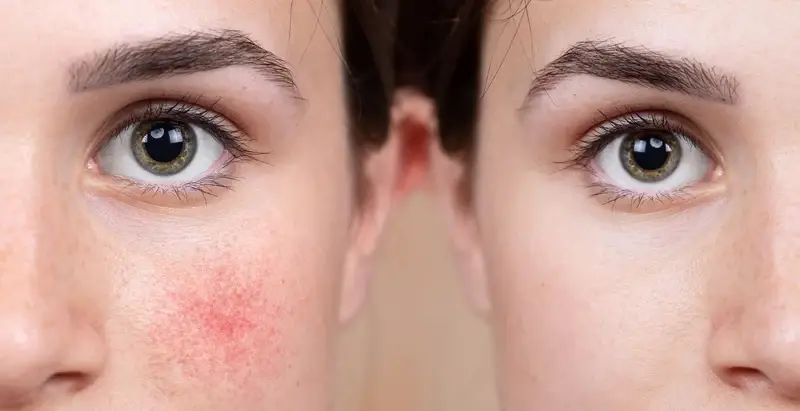
Rosacea is one of the most challenging skin disorders to treat. It is a chronic, inflammatory skin disorder that is characterized by redness (flushing), and features such as prominent blood vessels (also called telangiectasias), papules (pimple-like bumps), pustules (pimples with pus), and rough, textural changes. On rare instances, some patients may actually experience eye/visual disturbances such as stinging, redness, tearing, and inflammation.
The exact cause of rosacea is unknown but most clinicians suspect the following
Dysregulated immune system-patients who have rosacea have been found to have an overexpression of certain receptors in their skin that make it easy for the inflammatory process to start. Some substances in the skin, when exposed to UV light (usually from the sun), can start an inflammatory process in the skin, causing a rosacea breakout.
Overgrowth of certain microorganisms on the skin-the skin is colonized by a mite called Demodex folliculorum. It is postulated that these mites cause a reaction in certain predisposed individuals that cause them to have pimple-like bumps on their skin that is not caused by the acne bacteria, Propionibacterium acnes.
Abnormal vascular signaling-some studies show that patients with rosacea have an overexpression of certain receptors in their skin that cause increased blood flow, causing flushing and prominent blood vessels.
That being said, there are certain lifestyle modifications that can decrease the risk and occurrence of rosacea and rosacea-like symptoms. Here are some tips
Avoid alcohol, especially red wine. Alcohol can increase blood flow to your face and has also been shown to change your skin’s immune response that can make it more prone to inflammation.
Avoid extreme temperature such as direct heat and sun or really cold and dry temperatures as well as drastic temperature changes. This can irritate your skin and impair your skin barrier but can also increase vascularity to your facial skin.
Decrease intake of certain foods that are spicy or hot beverages. This can increase vascular flow to your skin/face.
Avoid caffeine and smoking. Studies show a high correlation with patients that smoke or previously smoked and incidence of rosacea as well as people who drink caffeine.
Decrease your stress. Stress has been shown to initiate the inflammatory cascade in the bodies, which could lead to a rosacea exacerbation. Emotional stress can also contribute to increased facial flushing.
Avoid harsh chemicals or anything that will abrade your skin, such as scrubs as this can impair your skin barrier as well as bring about a break out.
Use only mineral-based SPF. These do not have the irritating compounds in chemical sunscreens and have been shown to be well-tolerated by rosacea patients. These can also help better protect you from the UV rays of the sun.
Take care of your gut. Studies have shown that patients with rosacea have dysregulated gut flora, which leads them to be prone to inflammatory skin conditions like rosacea. Their gut bacteria is not optimal. Taking probiotics is a must for patients with inflammatory skin conditions. There is also an association with the bacteria Helicobacter pylori so taking care of your gut health is really important.
Keep a log of your triggers. Doing this will help pinpoint the specific foods, activities, or skin products that exacerbate your symptoms. Avoiding these triggers will help decrease the frequency and intensity of your rosacea breakouts. Some triggers for one patient may not be a trigger for another patient, so it is imperative that each patient does this religiously.
Make an appointment to see a Dermatologist or a Derm PA so that you can be accurately diagnosed. Depending on the severity of your symptoms, you may need a prescription medication to treat your rosacea. Sometimes, a pulsed-dye laser may be used to target the redness in your skin.
The best thing you can do as someone who suffers from rosacea is get yourself on a skincare regimen customized for your skin type as well as targeting your specific issues. The main goal of a skincare regimen targeting rosacea is to lower the inflammation as well as restoring and repairing the skin barrier.
Having rosacea is not easy, but it is easy to manage once you get on the right skincare and/or medications. Lifestyle modifications are also very important because they can help decrease your rosacea exacerbations.
Written by: Paula Purpera IG: @paulasperfectpout
Buddenkotte, J., & Steinhoff, M. (2018). Recent advances in understanding and managing rosacea. F1000Research, 7.
Marson, J. W., & Baldwin, H. E. (2019). Rosacea: a wholistic review and update from pathogenesis to diagnosis and therapy. International Journal of Dermatology.
Abram, K., Silm, H., Maaroos, H. I., & Oona, M. (2010). Risk factors associated with rosacea. Journal of the European Academy of Dermatology and Venereology, 24(5), 565-571.
Questions & discussion