
Beauty Guides
Is LED Light Therapy Dermatologist Approved — Practical Guide
A practical guide to is LED Light Therapy Dermatologist Approved. Compare the key concepts, product formats and points to check before choosing.
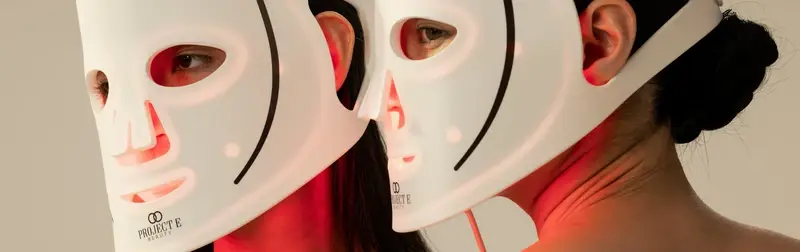
01 Do Dermatologists Recommend Red Light Therapy?
02 Why Do Dermatologists Recommend Red Light?
03 What Red Light Mask Do Dermatologists Use For Wrinkles?
04 Why Do Dermatologists Recommend a Red Light Mask With Infrared Light Therapy?
Do Dermatologists Recommend Red Light Therapy?
Why Do Dermatologists Recommend Red Light?
What Red Light Mask Do Dermatologists Use For Wrinkles?
While many LED masks have multiple colors to treat a broad range of skin concerns, for wrinkles, a mask containing red light wavelengths of 630 or 660nm in length and at least one type of infrared light wavelength for deeper collagen activation and to promote elasticity on all three skin layers. Dr Wong uses his LumaLux LED mask 3 times per week, but in reality, LED masks are safe for daily use as long as treatment times are adhered to.
Why Do Dermatologists Recommend a Red Light Mask With Infrared Light Therapy?
The difference with near-infrared light is that the wavelength is much longer and can penetrate deeper into the cells and beyond, reaching surrounding tissue, nerves, and muscles. Red light penetrates approximately 2 mm into the skin, whereas infrared light penetrates up to 5 mm and deep infrared up to 10 mm. As a general rule, ‘deeper’ does not always mean more effective with red light therapy, but in this case, precise 850nm and 1072nm wavelengths are proven to have a deep impact on the skin cells, leading to powerful skin restoration and healing. Dermatologists recommend combining red and infrared light wavelengths as they have a complementary impact on skin health and healing.
Red light is most effective in the early stages of healing. It triggers the release of immune cells, helps cells multiply, and supports fibroblast growth. It also helps form the extracellular matrix, which provides structural support to skin cells.
Questions & discussion