
Beauty Guides
Microneedling for atrophic scars: clinic or at-home results — Practical Guide
A practical guide to microneedling for atrophic scars: clinic or at-home results. Compare the key concepts, product formats and points to check before choosing.
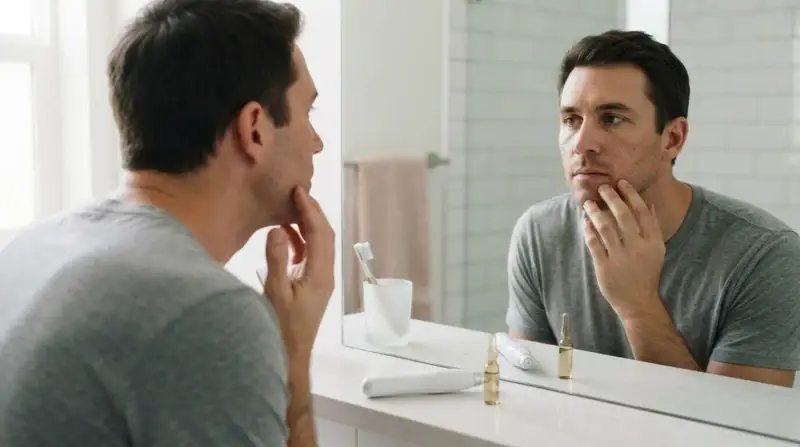
At-home devices and clinic treatments aren’t interchangeable for microneedling for atrophic scars. A dermatologist can assess scar patterns and skin type, then tailor a professional plan. This guide compares collagen remodeling, recovery, skin-tone considerations, and treatment add-ons to help you understand the differences.
Clinic and at-home approaches aren’t interchangeable; scar pattern and skin type shape what professional treatment can address.
Collagen remodeling takes time, so visible texture changes may continue to develop over several months.
Recovery varies by treatment, and microneedling, laser resurfacing, and combination approaches have different downtime expectations.
Some indented scars may benefit from a tailored combination of treatments rather than microneedling alone.
Serums and platelet-rich plasma can be considered as add-ons, but the right approach depends on the treatment plan.
Comparing treatment downtime and skin-tone considerations
Microneedling and collagen and elastin production
Are the results the same whether you use an at-home microneedling device or see a dermatologist?
Microneedling with serums or platelet-rich plasma
Microneedling for atrophic scars
Downtime depends on the technique, treatment intensity, and the scar pattern being addressed. Microneedling for atrophic scars commonly causes redness for 1 to 2 days, while fractional laser resurfacing usually involves a longer recovery. Non-ablative fractional lasers may leave redness and mild swelling for 3 to 5 days; ablative fractional lasers typically involve 5 to 10 days of downtime.
Microneedling may suit Fitzpatrick Skin Types III to V because it doesn’t alter melanocyte number. Skin tone still matters when planning resurfacing: a tailored approach can account for pigmentation concerns and differences in scar texture. People with acne scarring often have more than one scar type, so the technique and combination of treatments may vary across the face.
Microneedling, fractional laser, subcision, and chemical peels work differently. Microneedling supports collagen remodeling, lasers resurface skin, subcision releases tethered scars, and chemical peel downtime can range from 1 to 10 days, depending on the peel. Deep ice-pick scars may call for TCA CROSS, while tethered rolling scars may benefit from subcision.
Scar shape helps guide treatment choices. Rolling scars create broad depressions, while boxcar scars have more defined edges; both may respond to microneedling approaches. Deep ice-pick scars often show less improvement with microneedling alone. A clinician may combine techniques, such as subcision with microneedling for tethered tissue, or pair resurfacing with another approach for mixed scars.
A series is common rather than a single session. Scar microneedling is often planned as 3 to 6 sessions, spaced 4 to 6 weeks apart. The interval allows the skin to progress through its initial recovery before the next appointment. A different scar pattern or treatment combination can change the schedule.
Before treatment, following a dermatologist-recommended skincare routine for 2 to 4 weeks can support treatment response. Afterward, avoid makeup for 24 hours and harsh or abrasive products for at least 24 hours. Daily broad-spectrum sunscreen with SPF 30 or higher helps protect treated skin throughout the series.
For at-home routines, keep product choices aligned with the device and its intended use. The microneedling collection offers products for professional and advanced skincare routines, while scar-specific treatment planning remains a separate consideration.
Treatment plans may combine microneedling with lasers, subcision, or fillers. A tailored approach matters because many patients have multiple acne-scar types, so treatments can be selected for the specific scars being addressed.
People treated for acne scars may need 3 to 5 microneedling sessions, spaced 2 to 4 weeks apart. A series of microneedling treatments is recommended for the best results, and yearly maintenance may be needed. The initial healing phase after a microneedling or resurfacing session generally occurs during weeks 1 to 4. Minor bleeding or bruising at microneedling treatment sites should resolve within a few days.
Microneedling encourages collagen and elastin activity, which can gradually improve the look and feel of atrophic scars. Because collagen remodeling takes months, changes build over time rather than appearing immediately after treatment.
How Microneedling Stimulates Collagen
Microneedling uses a repeated, controlled technique to prompt the skin’s natural renewal process, including collagen and elastin production. These structural proteins support skin firmness and texture. For a depressed scar caused by tissue loss, added collagen may make the indentation less noticeable. The effect develops gradually, rather than acting as an instant filler.
Scar remodeling involves forming and reorganizing collagen around an atrophic depression. As collagen develops, the transition between the scar and surrounding skin may look softer. This isn’t the same as a surgical lift or immediate filler effect. The starting scar pattern and the skin’s remodeling response influence how much the texture changes.
Rolling scars, for example, create broad, shallow depressions, while other atrophic scars have more defined edges. Collagen remodeling may improve overall texture, but it doesn’t release every tether beneath a scar. This helps explain why a clinical plan may pair microneedling with another technique, such as subcision, for selected scars.
Timing matters. Progressive remodeling and more visible improvement may occur during months 1 to 3 of treatment. The cumulative effect may become clearer during months 3 to 6 of a planned series, while the full result can continue developing through months 6 to 12 and beyond. Each session starts another gradual remodeling period.
Radiofrequency microneedling combines microneedling with radiofrequency energy. It’s one fractional approach used for mixed or atrophic acne scars, not another name for standard microneedling. A professional plan weighs scar shape, skin texture, and the intended effect before selecting a device or treatment combination.
Collagen changes also continue after the final appointment. Microneedling results can keep improving for 3 to 6 months after each session, so judging texture immediately may miss later progress. Compare the same areas under similar lighting, and allow time for remodeling between treatment milestones.
For routines that include microneedling, explore microneedling skincare products as one part of a broader approach to skin texture.
No. An at-home device and a dermatologist’s treatment don’t offer the same level of scar assessment or personalization. A dermatologist can evaluate skin type, scar pattern, and texture, then build a plan around those findings. At-home routines can support general skincare, but they don’t replace an individualized assessment of atrophic acne scars.
Scar type matters. Rolling scars are broad and depressed, boxcar scars have more defined edges, and ice-pick scars are narrow and deep. These differences affect which technique may suit the skin’s surface. Microneedling may improve texture, while tethered scars can call for subcision. A dermatologist may combine techniques when acne scarring includes several patterns.
Results take time. Changes may start to show within a few weeks, but fuller results usually develop over several months. Improvement can last, though natural collagen loss with age may make some scars more visible again. A series of sessions is common, and maintenance microneedling may help sustain changes; a dermatologist may recommend a session once a year.
In the United States, treatment cost varies with clinic location, the number of sessions, scar pattern, and add-ons such as subcision. These factors shape the overall plan, so a single price won’t describe every treatment course.
At-home microneedling isn’t the right starting point for people with active acne, an unclear scar pattern, or deep-looking, tethered scars. A dermatologist can assess these concerns and distinguish atrophic scars from other skin changes before selecting an approach. Managing active acne also matters, because new breakouts can create additional scarring while older marks are being addressed.
Microneedling can also address concerns beyond acne scars, but the treatment area and goal affect the plan. For acne scars, a specialist considers whether depressions are rolling, boxcar, or ice-pick, and whether tissue appears tethered. This assessment helps determine whether microneedling alone fits or another technique belongs in the plan.
For advanced at-home routines, a quality microneedling device can support a consistent skincare approach. Keep its role distinct from clinical scar evaluation: an at-home device doesn’t determine scar type or provide the tailored combination a dermatologist can plan.
The practical difference isn’t simply where a needle is used, but whether the concern has been assessed before choosing a plan. A dermatologist specializing in scar treatment can assess an individual’s skin type and scar condition, then recommend a personalized approach. This keeps the person’s skin and the condition being addressed central to the decision, rather than assuming every depressed area calls for the same technique.
Atrophic acne scars result from tissue loss, giving the skin a depressed or sunken appearance. Understanding that contour is part of assessing the scar. Because skin naturally loses collagen with age, some scars may become more visible over time. A treatment plan can take that possibility into account, alongside skin type and the nature of the scars. A personalized assessment helps set expectations for the individual condition instead of assuming a device will affect everyone in the same way.
Microneedling can be performed with or without serums or platelet-rich plasma (PRP). An add-on changes the treatment plan, but it doesn’t replace assessing scar pattern, skin texture, and the intended outcome. A dermatologist can determine whether a combination approach fits the person’s acne scarring and explain each component’s role.
Serums may be applied after microneedling as part of a skincare routine. Hyaluronic acid, vitamin C, and growth factors are among the ingredients used in post-treatment serums. They serve different skincare roles, so the choice should fit the routine and treatment plan rather than follow a one-size-fits-all formula. Choose products intended for the planned use.
PRP is another possible add-on. Studies cited by the American Academy of Dermatology found that microneedling combined with PRP can fade acne scars by 50% to 70%. That figure describes study findings, not a promised outcome for every person. Scar type and treatment details still matter when interpreting any reported improvement.
Combination results also depend on which treatments were paired. In one reported group, 31% of patients with Grade 4 acne scars improved by two grades after combination treatment. Among patients with Grade 3 scars, 75% improved by one grade. Those figures describe scar-grade changes in particular groups, not a direct comparison of serum and PRP.
That distinction is useful during an evaluation. A serum supports the skincare portion of a plan, while PRP is a separate clinical add-on. Neither automatically addresses every scar pattern. For example, a clinician may consider whether rolling scars, boxcar scars, or tethered areas need another technique alongside microneedling.
Lasers and other procedures may also be part of a combination plan, depending on the scar pattern and treatment goals. Adding more modalities doesn’t mean every option is appropriate together or at the same appointment. A dermatologist’s evaluation helps map the sequence, the purpose of each treatment, and how progress will be assessed throughout the series.
After a session, redness may be part of the short recovery period. Keep the post-treatment routine simple and follow the clinician’s instructions. A serum containing hyaluronic acid, vitamin C, or growth factors may fit that routine. An add-on isn’t a shortcut: collagen remodeling and changes in scar appearance develop over time.
For a thoughtful plan, distinguish the choice of serum from the decision to add PRP or lasers. Combining microneedling with another approach should reflect the scar pattern, not a trend or a single study percentage. This makes the treatment discussion clearer and keeps expectations tied to the actual plan.
Atrophic scars form where skin tissue is lost, leaving depressions such as rolling, boxcar, or ice-pick scars. Microneedling supports collagen remodeling, but scar shape affects how well the procedure fits. A useful treatment plan starts by distinguishing broad rolling depressions from narrow ice-pick scars and tethered areas. That assessment matters because one technique may not address every feature.
A prospective study followed 45 patients with atrophic acne scars who completed subcision and microneedling, according to The study authors. The combination was delivered across four sessions, spaced four weeks apart. Subcision addressed tethered tissue, while microneedling supported surface and collagen remodeling. This example shows why a clinician may select a combination rather than rely on one therapy for every scar.
Three months after starting treatment, 95.56 percent of patients had a reduction of at least one scar grade. The study authors also reported that 17.8 percent of patients described a 75- to 100-percent improvement in their acne scars. These are findings from that study group, not a promised result for another person. The treatment response can differ with scar type and starting grade.
The pattern of improvement matters as much as the overall percentage. Rolling and boxcar scars responded well in the study, while ice-pick scars showed little improvement. At three months after the final session, 42 percent of patients had Grade 2 scars, compared with 9 percent before treatment; 11 percent had Grade 1 scars. Those changes show how grading can track progress, while also revealing limits for specific scars.
For deep ice-pick scars or narrow boxcar scars, a dermatologist may consider TCA CROSS rather than microneedling alone. Fractional devices, including fractional lasers and radiofrequency approaches, may be considered for mixed scar patterns. The treatment plan should match the technique to the scar’s structure, rather than simply add procedures. Assessment also helps distinguish surface texture concerns from tethering beneath the skin.
Expect a series-based process. Meaningful improvement is commonly noticed after 2 to 3 scar-treatment sessions, while collagen changes may continue for 3 to 6 months after each session. A completed series may need maintenance over time. For the clearest picture, track the same areas and scar grades across appointments instead of judging the procedure immediately after one session.
helps licensed estheticians and advanced at-home skincare enthusiasts find products and equipment for their routines. Options include DR. PEN Microneedling Devices, Advanced Microneedling Serum SD - Control Salmon DNA Ampoule Serum, Jelly Mask Kits, and BB Glow Treatment Supplies. These offerings can complement a broader skincare setup, but choosing a product is separate from assessing scar type or planning professional treatment. Consider your experience and intended use when selecting equipment and skincare products. For atrophic scars, keep product decisions distinct from clinical evaluation, especially when scar patterns include rolling, boxcar, or ice-pick depressions. If you have questions about products, contact .
Questions & discussion